
Before starting any spraying task, calibration is the most important procedure for a turf boom sprayer. You need to confirm three core factors: travel speed, working pressure and nozzle flow rate.
Keep consistent forward speed when spraying greens and fairways; speeding up or slowing down randomly will change the actual chemical dosage per unit area.
Check all nozzles before use, replace blocked or worn nozzles timely. Worn nozzles produce uneven spray pattern and cannot guarantee uniform coverage.
Weather condition is another key factor for turf sprayer operation.
It is better to arrange spraying in early morning or late afternoon with low wind speed.
Strong wind will trigger droplet drift, which may hurt adjacent ornamental plants or enter water features on golf courses. Avoid spraying under high-temperature midday sun; rapid evaporation of droplets will reduce absorption effect and increase the risk of turf phytotoxicity.
Different turf zones require different spray settings.
For putting greens, most managers choose low-pressure, fine-droplet nozzles and narrower boom width, to apply fungicides and growth regulators gently without hurting shallow root systems of bentgrass.
For fairways and sports field rough areas, wider turf boom sprayer booms and higher working efficiency are preferred to cover large areas quickly. The spot spray wand accessory is ideal for isolated weed patches, so you do not need to spray the whole area.
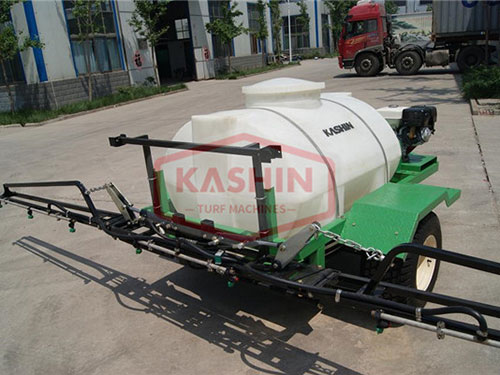
After finishing spraying work, proper cleaning is mandatory for your professional lawn sprayer.
Residual chemicals left in tank, pump and hoses will cause corrosion, block nozzles, and lead to cross-contamination when switching between herbicides and fungicides next time.
Rinse the whole system with clean water thoroughly after each use, and store the machine in dry, ventilated shelter. Regular maintenance of pump, seals and pressure gauge extends service life of your turf care spray equipment.
Post time: Oct-27-2026