
Excellent turf management cannot rely only on agronomy knowledge. The final turf surface quality, daily work speed and overall labor cost all depend heavily on your turf maintenance equipment fleet.
Many golf course superintendents and sports facility managers run into troubles when purchasing machinery. Buying mismatched, low-quality attachments may scratch and damage fine turf, cause frequent breakdowns and waste limited budget.
This buying guide explains how to build a complete and efficient turf machinery package, introducing turf tractor and key attachments covering every stage of turf maintenance work.
The Core Power Unit: Turf Tractor
Different from ordinary farm tractors, professional turf tractors are designed with low ground pressure tires to minimize soil compaction and prevent scuffing grass canopy.
When selecting a turf tractor, first evaluate your site acreage, field terrain and all attachments you plan to pull. Check PTO power, hydraulic capacity, turning radius and weight distribution.
For golf courses and sports fields, compact but powerful turf tractors are preferred. They can operate on greens, tees and tight corners without hurting delicate turf.
Before making purchase decisions, list all attachments you will use: lazer grader blade, turf drag mat, field top maker, turf trailer and other implements. Confirm the tractor’s hitch and hydraulic system can safely drive all these accessories.
Critical Note:
Low ground pressure tires are non-negotiable for professional turf sites. Heavy farm tractors will create severe compaction and rutting, destroying the premium playing surface you spend huge efforts to maintain.
Indispensable Turf Tractor Attachments
Precision grading is critical for drainage and surface smoothness. lazer grader blade working with laser leveling systems shaves high spots and fills low spots with high accuracy. It is widely used in new field construction, annual surface renovation, rut repair after tournaments and drainage correction. For sports turf, surface leveling stops standing water, reduces muddy patches and creates consistent ball roll for golf and soccer fields.
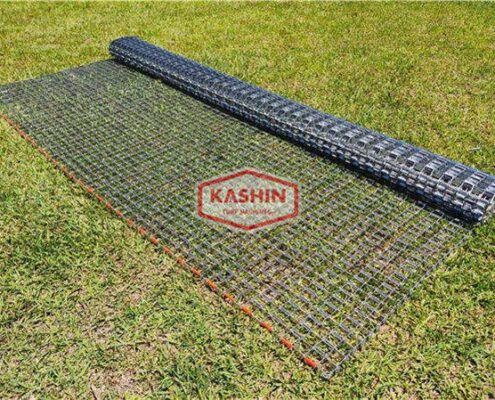
turf drag mat looks simple but plays an irreplaceable role. After aeration or topdressing, drag mats spread sand or soil dressing evenly, break aeration plugs and smooth the turf canopy. It helps topdressing material blend into grass, control thatch accumulation and form uniform playing surfaces. Different sizes and weights of drag mats are available, which can be pulled by turf tractor or utility vehicles for large-area surface conditioning.
field top maker combines light rolling and surface finishing functions. It firms up loose topdressing, smooth minor undulations and gently compacts root zone without over-compacting soil. Golf courses and tournament sports fields use field top maker before competitions to reach the required surface firmness and smoothness standard.
turf blower quickly removes aeration cores, fallen leaves, grass clippings and surface debris over large areas. Manual raking is slow and labor-intensive. Tractor-mounted or walk-behind turf blower greatly cuts cleanup time after aeration, topdressing and autumn leaf falling.
turf trailer transports sand, topdressing material, seed, tools and waste across your site. A heavy-duty turf trailer matched to your turf tractor eliminates repeated manual hauling and improves grounds crew productivity.
Matching Equipment to Your Site
You should match equipment specification to your site size and turf type. Small 1–3 hectare sports fields or 9-hole golf courses can use compact turf tractor with medium-width attachments.
Large 18-hole golf resorts and multi-pitch sports complexes need higher horsepower tractors and wider working attachments to cover large acreage faster.
Cool-season and warm-season turf varieties also affect your operation workflow. Bentgrass putting greens require lighter, more gentle equipment and narrower working widths. Bermuda grass sports fields can bear more aggressive aeration and grading work during dormancy.
If you regularly host tournaments, prioritize equipment that delivers high-quality surface finishing with minimal turf disturbance.
Key Factors When Sourcing
- ✓ Build quality: Turf equipment runs long hours under various weather conditions. Low-grade steel and weak frames bend easily under heavy field workload.
- ✓ Compatibility: Verify all attachments fit your turf tractor’s hitch and hydraulic system before buying.
- ✓ Maintenance and spare parts availability: Select manufacturers with easily accessible replacement parts to reduce downtime in busy turf care seasons.
- ✓ After-sales technical support: Reliable suppliers provid
Post time: Oct-13-2026