Many turf facility operators underestimate the value of a reliable turf aerator machine.
Healthy turf does not only rely on mowing, watering and fertilizing. Without periodic aeration, soil compaction will gradually destroy turf root systems, raise maintenance costs and reduce the site’s usability.
Understanding how a commercial lawn aerator works helps you arrange scientific golf turf management and make wise turf maintenance equipment investment.
The core working logic of the turf aerator machine is to break compacted soil structure without fully digging up the lawn. As the hollow tines cut and extract soil cores, the dense soil layer is opened up. Soil bulk density decreases, pore space increases.
This fixes multiple common turf problems at the same time:
Different turf sites have different aeration cycles.
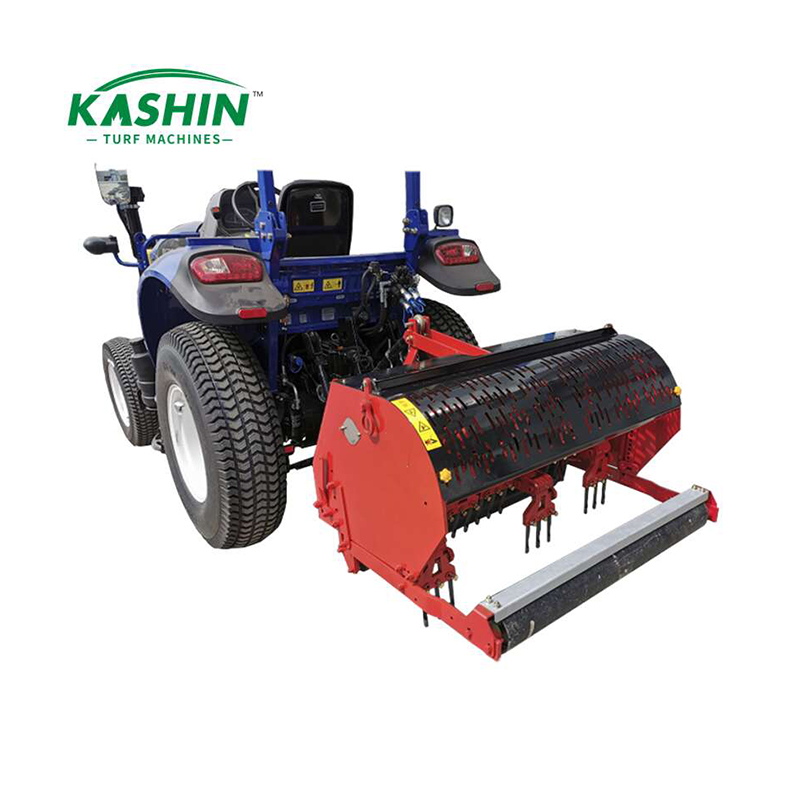
When operating the commercial lawn aerator, operators need to avoid working under extreme high temperature, to shorten turf recovery time and prevent grass withering.
Choosing the right turf aerator machine also matters. Small walk-behind models fit narrow areas, while tractor-towed lawn aerator suits wide fairways and large sports fields, greatly improving working efficiency and saving labor cost.
High-quality tines and solid frame structure guarantee stable performance under long-hour continuous operation.
If you are planning to upgrade your turf maintenance equipment or need consultation on golf turf management and aeration scheduling, contact our professional team.
We supply complete turf care machines including aerators, turf tractors and supporting attachments for global turf managers.
Post time: Oct-19-2026