
Excessive thatch accumulation is a common challenge. A thatch layer that is too thick impedes the penetration of water and nutrients while fostering the growth of pathogens.
Gradually manage thatch thickness through a combination of regular verticutting, aeration, and light topdressing, avoiding aggressive, one-time verticutting that could place undue stress on the turf.
Prioritize prevention in disease management.
During hot, rainy seasons, closely monitor for dollar spot and Pythium blight; balance irrigation duration to prevent prolonged leaf wetness, and rotate fungicides to minimize pathogen resistance and reduce turf damage from large-scale outbreaks.
Constant foot traffic leads to numerous ball marks and localized thinning or bare spots.
Promptly repair ball marks during routine maintenance and use the autumn window to overseed and revitalize damaged areas; rotate teeing positions to distribute wear and prevent prolonged damage to specific zones.
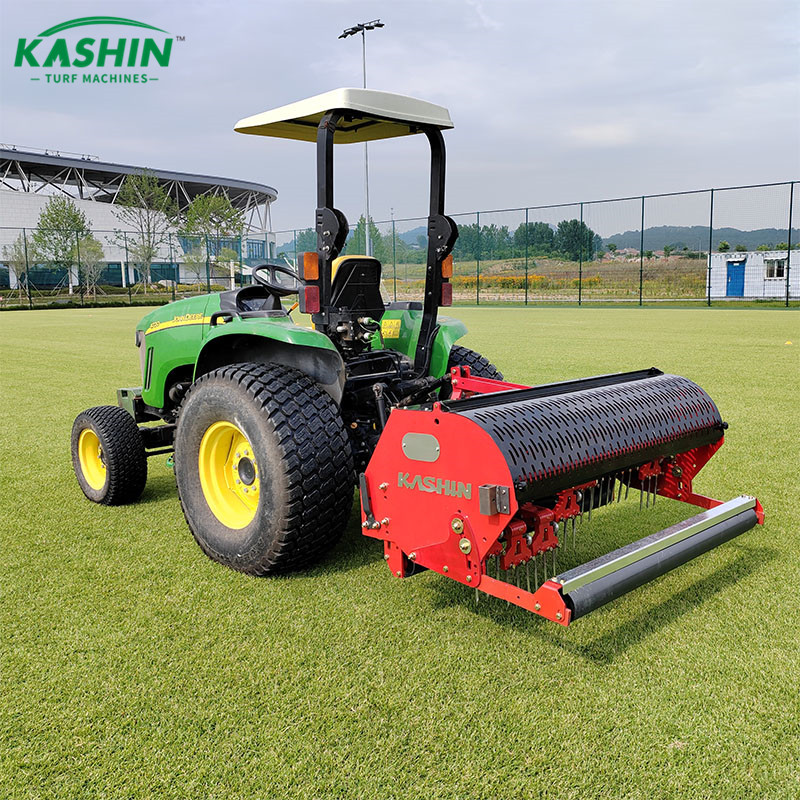
Select appropriate professional machinery for daily maintenance to minimize soil compaction caused by heavy equipment. Combined with a scientific seasonal management plan, this effectively reduces the risk of turf degradation, ensuring the greens maintain their competitive appearance and performance over the long term.
Post time: Jul-27-2026