
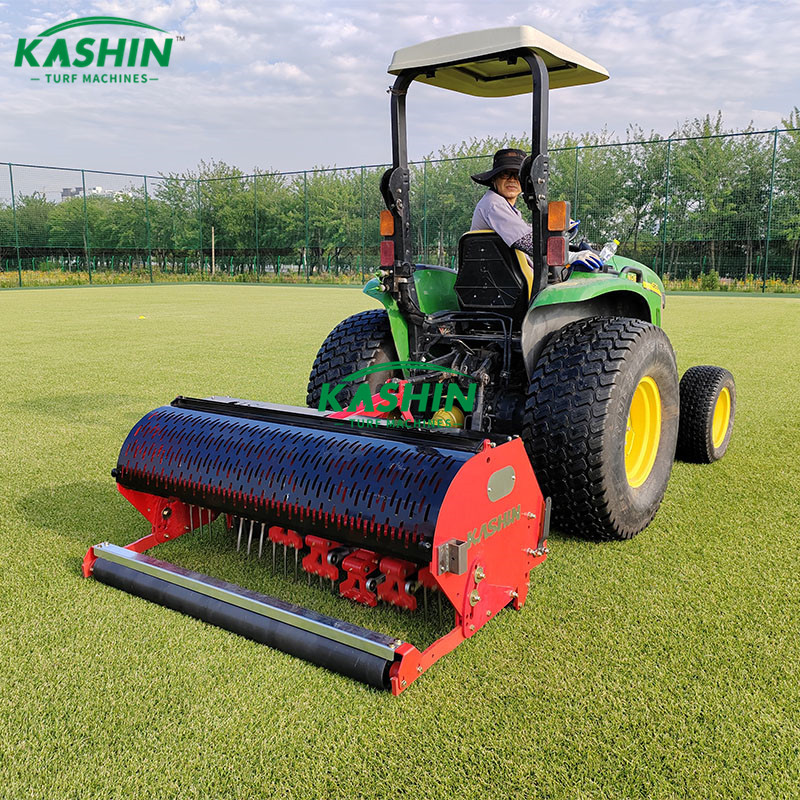
 Golf green aeration is one of the most critical annual turf care tasks, and towed lawn aerator is the preferred professional turf care machine for large golf courses.
Let’s break down the full working steps of a turf aerator in real lawn aeration process, so you know how this machine refreshes compacted putting green soil.
Before starting the lawn aeration process, turf technicians check soil moisture.
Slightly moist soil is ideal; too dry soil will damage tines and tear turf, while overly muddy soil sticks inside hollow tines and affects core extraction effect.
The towed lawn aerator is hitched behind a turf tractor. Operators adjust working depth, tine spacing and ground speed according to green maintenance plan.
For putting greens, aeration depth is usually controlled between 70–100mm to avoid hurting main root systems.
When the turf tractor moves forward steadily, power transfers to the aerator’s tine assembly. Hollow tines drop vertically and penetrate the green turf and compacted subsoil.
As the machine continues moving forward, tines pull complete soil plugs out of the ground and discharge them on the grass surface. Row by row, evenly spaced holes cover the whole green area.
After finishing the pass, staff leave soil plugs on the surface to decompose naturally, or collect and remove them based on management requirements.
The holes created by turf aerator serve as channels: oxygen enters the root zone, rainwater and irrigation water drain smoothly, and liquid fertilizer penetrates deep instead of running off.
After aeration, overseeding and topdressing can be carried out to further improve turf quality.
The working stability of professional turf care machine directly impacts green recovery time.
High-quality towed lawn aerator delivers clean core removal, less turf tearing and consistent hole depth.
If you need equipment for regular golf green aeration, reach out to us and learn more about our durable turf aeration machines.
Post time: Oct-19-2026