
Knowing the right time to carry out turf rolling is just as important as understanding the machine itself.
Turf rolling is commonly arranged after core aeration, top dressing, overseeding, new sod installation and spring thaw.
- ✓ In early spring, frost heave often lifts turf roots upward; gentle rolling pushes turf back into the soil and prevents drying out.
- ✓ After hollow tine aeration and sand topdressing, rolling helps sand fill the aeration holes evenly.
- ✓ For newly laid sod, one-time light rolling eliminates air pockets underneath sod and improves survival rate.
It is not advised to roll turf during dormancy stress, severe drought or after heavy rain.
Turf managers need to make rolling plans based on turf type, soil texture and site usage frequency.
Working Mechanism
The working mechanism of a pull-behind turf roller is simple but highly targeted for fine turf.
Connected to the rear of a turf tractor, the heavy drum rolls over the turf surface. Its weight creates uniform vertical pressure on the upper root zone. Unlike compactors used in construction, turf rollers are designed for low-pressure surface finishing, not deep soil compaction.
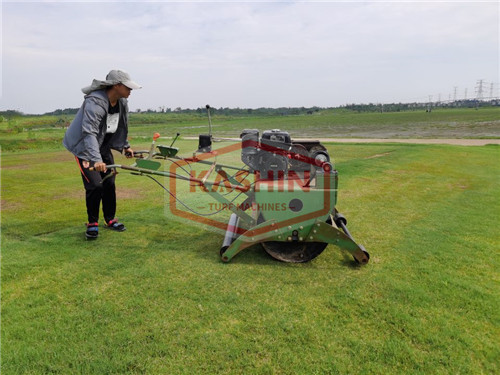
Step-by-Step Guide
Keep records of rolling frequency and weight for each green or field.
If you are upgrading your turf maintenance equipment and searching for stable pull-behind turf rollers suitable for fine turf,
Send us an inquiry for product details and matching recommendations
Post time: Oct-21-2026